New Rushcliffe Local Plan (accessible)
New Rushcliffe Local Plan Scoping Consultation
September 2026
Contents
- Introduction
- Purpose of the Scoping Consultation
- Responding to the Scoping Consultation
- Local Plan Preparation Timetable
- Existing Rushcliffe Local Plan and Greater Nottinghamshire Strategic Plan
- Local Government Reorganisation
- National Planning Policy
- East Midlands Spatial Development Strategy (SDS)
- Changes to Supplementary Planning Documents
- Strategic Environmental Assessment
- The Council's Priorities
- Vision and Spatial Strategy
- Housing
- Economic Growth
- Town, Village and Local Centres
- Culture, Tourism and Sport
- Energy, Sustainability and Climate Change
- Design and Placemaking
- Transport
- Infrastructure and Local Services
- Historic Environment
- Natural Environment and Blue / Green Infrastructure
- Future Consultation and Engagement
1. Introduction
Rushcliffe Borough Council has started preparation of a new Local Plan. The Local Plan will set out a vision for the borough, identify future development needs and establish planning policies and site allocations to guide development.
We are preparing the Local Plan under a new plan-making system introduced by the Government to streamline and speed up plan preparation.
This scoping consultation is the first stage of that process. It provides an opportunity for you to tell us what you think should be included in the Local Plan, together with the opportunities, challenges and priorities that should be considered as it is prepared. Your responses will help shape the future content of the Local Plan.
We are also seeking your views on how the Council should engage with local communities and others throughout the preparation of the Local Plan.
No decisions have been made for the new Local Plan about how much future development should be accommodated or where it should be located. At this stage we want to understand what matters you think the Local Plan should address and your aspirations for the future of Rushcliffe.
The Local Plan will need to balance social, economic and environmental considerations while responding to national planning requirements and ensuring that development takes account of Rushcliffe's distinctive towns, villages, countryside, heritage and environmental assets.
2. Purpose of the Scoping Consultation
This document provides an overview of the key issues and challenges facing Rushcliffe and asks a series of questions to gather views on what the new Local Plan should include at this early stage of its preparation.
This consultation will help us decide what the Local Plan should cover and how it should be prepared, including:
- identifying the key themes and locally specific issues that you think the Local Plan should address; and
- understanding how you would like to engage with the Council throughout the plan-making process.
The consultation focuses on the following topic areas:
- Vision and Spatial Strategy
- Housing
- Economic Growth
- Town, Village and Local Centres
- Energy, Sustainability and Climate Change
- Design and Placemaking
- Transport
- Infrastructure and Local Services
- Historic Environment
- Natural Environment and Blue / Green Infrastructure
- Culture, Tourism and Sport
The responses received will be analysed and summarised in a Scoping Consultation Summary. Alongside technical evidence and the Strategic Environmental Assessment, they will help inform the next stages of Local Plan preparation.
Further consultation will take place as the Local Plan is prepared and the spatial strategy, planning policies, site allocations and evidence base are developed.
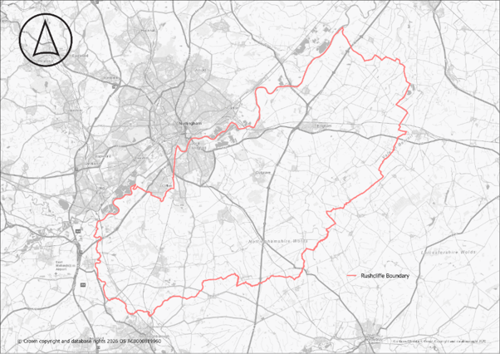
Figure1: Rushcliffe Local Plan area boundary
3. Responding to the Scoping Consultation
The consultation is open for responses to be submitted to the Council until 5pm on Friday 23 October 2026.
Responses to the Scoping Consultation, including responses to the questions set out in this document, can be submitted using the online response form on the Rushcliffe Local Plan page.
Alternatively, responses can be submitted by:
- Email to: localdevelopment@rushcliffe.gov.uk, or
- Post to: Planning Policy, Rushcliffe Borough Council, Rushcliffe Arena, Rugby Road, West Bridgford, Nottingham, NG2 7YG.
For further information, please contact the Council’s Planning Policy team by:
- Email: localdevelopment@rushcliffe.gov.uk
- Telephone: 0115 981 9911
4. Local Plan Preparation Timetable
The Council published a Notice of Intention to Commence Local Plan Preparation on 30 June 2026. The 30-month plan preparation period begins at the ‘Gateway 1’ stage, which is expected to take place in late October 2026.
| Stage | Indicative timetable |
|---|---|
| Publication of notice of intention to commence plan preparation | 30 June 2026 |
| Scoping consultation (first consultation stage) | 17 September 2026 to 23 October 2026 |
| Gateway 1 – publication of self-assessment summary | 31 October 2026 |
| Plan content and evidence consultation (second consultation stage) |
17 May 2027 to 28 June 2027 |
| Gateway 2 – observations and advice sought from planning inspector | 5 September 2027 |
| Proposed Local Plan consultation (third consultation stage) | 15 May 2028 to 10 July 2028 |
| Gateway 3 – observations and advice sought from planning inspector | 4 September 2028 |
| Submission for independent examination | 2 October 2028 |
| Adoption of Rushcliffe Local Plan | 30 April 2029 |
The timetable will be kept updated by the Council as work to prepare the new Local Plan progresses, with details available on the Rushcliffe Local Plan page.
Following the close of this scoping consultation, the Council will complete the Gateway 1 self-assessment, analyse responses, publish a Scoping Consultation Summary and prepare the next stage of plan-making, including proposed content, evidence and spatial strategy work.
Further engagement and consultation will follow at later stages as the spatial strategy, policies, site allocations and evidence base are prepared.
A separate ‘Call for Sites’ process is expected later, when landowners / site promoters will be invited to submit details of land that they would like the Council to consider for future development. Submission of a site through the Call for Sites process does not mean that it will be allocated for development.
5. Existing Rushcliffe Local Plan and Greater Nottinghamshire Strategic Plan
The new Local Plan will replace the current two-part planning policy framework that exists for Rushcliffe:
- Rushcliffe Local Plan Part 1: Core Strategy/Greater Nottingham Strategic Plan
- Rushcliffe Local Plan Part 2: Land and Planning Policies
The Rushcliffe Local Plan Part 1: Core Strategy was adopted in 2014 and covers the period to 2028. It sets out a strategic approach to growth across Rushcliffe, including a number of strategic allocations and other key designations.
The Core Strategy is expected to be replaced by the Greater Nottingham Strategic Plan (GNSP), which sets out a strategic approach to growth across Rushcliffe, Broxtowe and Nottingham City to 2041. The GNSP was published in draft form in March 2025 and is currently being examined by Planning Inspectors to determine whether it can be adopted. The Plan includes a draft requirement for 11,960 new homes in Rushcliffe between 2023 and 2041 (an average of 664 homes per year), although this may change through the examination process. If adopted, the GNSP would remain in force until it is replaced by the new Rushcliffe Local Plan.
The Rushcliffe Local Plan Part 2: Land and Planning Policies was adopted in 2019 and includes detailed policies for determining planning applications and non-strategic allocations. It too will be replaced by the new Rushcliffe Local Plan in due course.
6. Local Government Reorganisation
Local government in Nottinghamshire has been facing potential changes through the Government's local government reorganisation programme. In July 2026, the Government announced plans to replace Nottinghamshire County Council, Nottingham City Council and the nine district and borough councils, including Rushcliffe, with two new unitary authorities from April 2028. However, these proposals were paused on 7 September 2026 and are currently under review. The scope of this review by Government is unclear at the current time.
It is not yet clear what impact this situation may have on the preparation of Rushcliffe's new Local Plan. As more information becomes available, any implications for plan-making will need to be considered. However, Government guidance is clear that local government reorganisation should not delay the preparation of Local Plans.
7. National Planning Policy
The content of Local Plans is guided by national planning policy, principally the National Planning Policy Framework (NPPF).
The NPPF requires Local Plans to set out how development needs will be met, where development will take place and what infrastructure will be required to support growth.
The latest version of the NPPF introduced National Decision-Making Policies (NDMPs), which provide a consistent national approach to a range of planning matters. As a result, Local Plans should focus on locally specific issues and matters necessary to support the delivery of development. They should not duplicate, substantively restate, or be inconsistent with NDMPs unless specifically required by the Framework.
This means that Local Plan policies should generally be limited to those necessary to support the delivery of allocated sites or address clearly justified local issues. Site-specific policies may be used to set out requirements relating to matters such as layout, infrastructure provision and design. Local Plans may also identify sites or areas of land to be protected or enhanced for specific purposes, such as habitat improvement. The NPPF makes clear that other policies should only be included where there is a clear and evidenced local justification for doing so.
National planning policy key topic areas
The NPPF sets out a range of key topic areas which Local Plans are expected to address including:
- Sustainability
- Climate Change
- Housing
- Employment
- Town centres and retail
- Communications and Infrastructure
- Effective use of Land
- Green Belt
- Design
- Transport
- Health, Pollution and Safety
- Flood Risk
- Natural Environment
- Historic Environment
8. East Midlands Spatial Development Strategy (SDS)
Rushcliffe forms part of the area covered by the East Midlands Combined County Authority (EMCCA), which is responsible for preparing a Spatial Development Strategy (SDS) for Derbyshire and Nottinghamshire. The SDS will set out a strategic framework for growth and infrastructure across the area and, once adopted, will form part of the development plan for Rushcliffe. Local Plans will need to be in general conformity with it.
The SDS is at an early stage of preparation and is not expected to be adopted before 2028. The Council will therefore continue preparing the new Local Plan under current arrangements, while working closely with EMCCA and neighbouring authorities to support the SDS's preparation.
EMCCA has already published the East Midlands Growth Plan (2025), which will inform the production of the SDS. The Growth Plan identifies seven Strategic Growth Areas as the focus of growth and change within the combined authority area. One of these, the Trent Arc, partly covers Rushcliffe and includes within it the redevelopment of the former Ratcliffe on Soar Power Station as a strategic growth project. Our Local Plan will need to include local planning policies that contribute to the delivery of this regionally significant growth area and strategic growth project.
9. Changes to Supplementary Planning Documents
The current Rushcliffe Local Plan is supported by eight Supplementary Planning Documents (SPDs) which provide additional policy guidance on different planning topics. These are:
- Rushcliffe Design Code SPD
- East Midlands Freeport Strategic Infrastructure and Contributions SPD
- East of Gamston/North of Tollerton Development Framework SPD
- Developer Contributions SPD
- Low Carbon and Sustainable Design SPD
- Affordable Housing SPD
- Melton Road Edwalton Development Framework SPD
- Wind Energy SPD
Under the new plan-making system, SPDs can no longer be prepared and existing SPDs will lose their status when a new Local Plan is adopted. We will therefore need to consider whether any important guidance from existing SPDs should be incorporated into the new Local Plan.
The new system allows for Supplementary Plans to be prepared, which form part of the development plan and carry the same weight as Local Plan policies. Unlike SPDs, their scope is more limited and they are primarily intended for site-specific matters, such as masterplans and development frameworks, and certain design-related matters, such as design codes. We will therefore need to consider whether any Supplementary Plans should be prepared alongside the new Local Plan.
10. Strategic Environmental Assessment
The preparation of the Local Plan will be informed by a Strategic Environmental Assessment (SEA) and other statutory assessments where required. The Council is currently preparing a SEA Screening Report and SEA Scoping Report. These are the first two formal stages of the SEA process. The Screening Report is required to identify if an SEA is required. It is anticipated that one will.
The purpose of the scoping stage is to identify the key environmental issues that the SEA should focus on and establish the framework against which the Local Plan's strategy, policies and site allocations will be assessed. The SEA will then assess the likely significant environmental effects of the emerging Local Plan, including reasonable alternatives, the spatial strategy, policies and site allocations.
11. The Council's Priorities
The Rushcliffe Corporate Strategy 2024-2027 sets out the direction and priorities for the borough over the three-year period to 2027 and how success will be measured against these. The Council’s key priorities are:
- The Environment
- Quality of Life
- Sustainable Growth
- Efficient Services
The new Rushcliffe Local Plan should aim to align with these priorities to support the Council’s wider ambitions within the borough.
12. Vision and Spatial Strategy
The Council is seeking views on the vision for Rushcliffe's future growth, including how development should be distributed across the borough and the principles that should guide future development.
The vision and spatial strategy will establish how and where Rushcliffe should grow and change over the plan period. They will guide decisions on the location of new homes, employment development, infrastructure, services, blue/green infrastructure and regeneration opportunities across the borough.
National Planning Policy and Other Key Considerations
National planning policy requires the Local Plan to set out a positive vision and spatial strategy for the area. This should identify how development needs will be met while protecting and enhancing the natural, built and historic environment.
National planning policy places significant emphasis on making efficient use of land. This includes directing higher-density development to accessible locations, such as town centres and areas well served by public transport, while ensuring development responds appropriately to local character. Mixed-use development can also help make more efficient use of land by locating homes, jobs, services and community facilities closer together, reducing the need to travel and supporting more sustainable patterns of development.
The preferred spatial strategy should be informed by a range of evidence, including environmental assessments, transport studies, infrastructure capacity assessments, viability appraisals, site assessments and public consultation. Together, this will help identify the most appropriate approach to accommodating growth from the reasonable alternatives available.
The spatial strategy must provide sufficient development to meet identified needs over a period of at least ten years from the date the Local Plan is adopted. A longer plan period may be appropriate where this would support the delivery of major development opportunities or strategic infrastructure. The current Rushcliffe Local Plan already includes a number of large strategic allocations whose delivery extends beyond the existing plan period.
About Rushcliffe
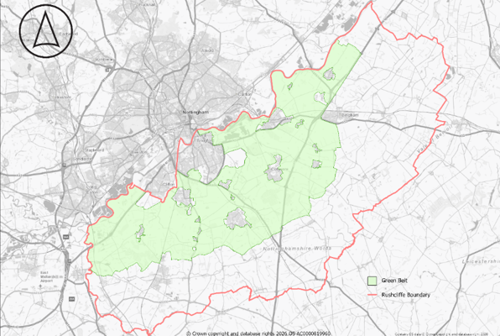
West Bridgford forms part of the Nottingham urban area and is the borough's largest settlement, accommodating around 43,000 of Rushcliffe's approximately 127,000 residents. The remainder of the borough is largely rural, with the population distributed across the larger settlements of Bingham, Cotgrave, East Leake, Keyworth, Radcliffe on Trent and Ruddington, together with numerous villages and hamlets. Around 40% of the borough falls within the Nottingham-Derby Green Belt.
Figure 2: Green Belt within Rushcliffe
Developing the Vision and Spatial Strategy
As the vision and spatial strategy are developed, the Local Plan will need to consider:
- the role of West Bridgford (as part of the Nottingham urban area) and the towns, villages and neighbourhoods across Rushcliffe;
- the relationship between growth, infrastructure, transport and environmental objectives;
- how development can support sustainable communities and healthy places;
- how growth can be accommodated while protecting and enhancing Rushcliffe's natural, historic and cultural assets;
- whether a review of Green Belt land is required, having regard to national planning policy; and
- how the efficient use of land can contribute to sustainable development.
A range of approaches may need to be considered, including:
- focusing growth within or adjoining the Nottingham urban area (within Rushcliffe), towns and larger villages, with more limited growth elsewhere;
- distributing growth across a wider range of towns and villages;
- strategic urban extensions, new settlements or other strategic-scale opportunities; and
- a combination of these approaches.
What the Local Plan needs to achieve:
- establish a clear vision for the future growth of Rushcliffe;
- identify a sustainable strategy for accommodating development needs;
- coordinate growth with infrastructure, services and transport provision;
- make efficient use of land while respecting local character;
- protect and enhance environmental, heritage and landscape assets;
- consider the role of the Green Belt in accommodating future growth; and
- ensure the spatial strategy is deliverable and supported by evidence.
We would like to know from you:
- what your priorities are for the future of Rushcliffe;
- where future growth should be focused;
- what opportunities and challenges should influence the spatial strategy;
- what role different towns, villages and neighbourhoods should play in accommodating growth; and
- how growth can be balanced with the protection of the borough's character and environment.
Question 1: What opportunities, challenges and priorities should inform the Local Plan's Vision and Spatial Strategy?
Question 2: How do you think future homes, jobs and services should be distributed across Rushcliffe? Are there particular places where growth should be encouraged or limited?
Additional comments: Please provide any further comments relating to vision or spatial strategy should you wish.
Note: read the guidance below for information about how to give your feedback to this consultation once you have read all of the questions.
13. Housing
Providing sufficient homes for existing communities and future residents is a key part of planning for the future of Rushcliffe. The new Local Plan will need to consider how housing growth can contribute to creating sustainable, healthy and successful places that meet the needs of existing and future communities.
National Planning Policy and Other Key Considerations
National policy requires Local Plans to set a target for the minimum number of new homes to be delivered over the plan period to meet identified needs. A target above identified needs may be appropriate where a higher figure is necessary to meet the needs of neighbouring areas, or to reflect growth ambitions linked to economic development or infrastructure investment.
Local Plans must also respond to demographic change, including an ageing population and changing household structures, helping to ensure people can remain within their communities as their housing needs evolve over time. The Local Plan will therefore need to consider the type, size, tenure and accessibility of homes required across the borough.
A key objective of national planning policy is to ensure that a wide range of housing needs are met. This includes providing homes for families, older people, people with disabilities, those requiring specialist accommodation, Gypsy and Traveller communities, and people seeking self-build or custom-build opportunities.
About Rushcliffe
The population of Rushcliffe increased by around 15% between 2011 and 2024, largely driven by housing growth. This has not occurred evenly across the borough, and while some settlements have seen increases in population, others have seen limited change or declines.
Compared with the national age profile, Rushcliffe has fewer people in early adulthood and a higher proportion of residents aged 40 and over. The proportion of pensionable age residents is also growing faster than the national average, with some settlements having particularly high concentrations of older residents.
The predominant housing tenure in Rushcliffe is owner-occupation. Nearly 75% of households own their own homes, either outright or with a mortgage. This is significantly above the national average for owner occupation of 63%.
Property prices in Rushcliffe remain significantly higher than the Nottinghamshire average. Housing affordability continues to be a key issue within the borough, with house prices typically around eight to nine times average earnings. Affordability pressures can be particularly acute in rural areas, where house prices are often higher and the supply of affordable housing is more limited.
Planning for Future Housing Needs
One of the key questions for the Local Plan is therefore how much housing should be planned for and where it should be located.
The emerging Greater Nottingham Strategic Plan includes a draft requirement for 11,960 new homes to be delivered in Rushcliffe between 2023 and 2041. This equates to an average of 664 homes per year over the 18-year period. However, it is expected that the housing requirement in the new Local Plan will need to be substantially higher.
Until a Spatial Development Strategy has been prepared by the East Midlands Combined County Authority (EMCCA), the Local Plan will be responsible for establishing the borough's housing requirement using the Government's standard method for calculating local housing need. The latest assessment using this method identifies a need for approximately 890 homes per year. This is likely to require the identification of additional land to accommodate future growth.
Sites already allocated for housing in the current Local Plan, but not yet fully developed, will continue to contribute towards meeting future needs. Around 13,000 homes are expected to be delivered on sites that already have planning permission or are allocated for development in the adopted Rushcliffe Local Plan. While these sites will make a significant contribution towards future housing delivery, the Local Plan will need to assess whether additional land is required to meet future housing needs over the new plan period.
To inform the preparation of the Local Plan, the Council will undertake needs assessments to identify the accommodation requirements of different groups within the community, including older people, people with disabilities and Gypsy and Traveller communities.
Future housing growth will need to be carefully planned alongside the infrastructure, services and facilities required to support it, helping to ensure that new communities are sustainable and well served.
What the Local Plan needs to achieve:
- provide sufficient homes to meet identified needs;
- direct growth to locations that can sustainably accommodate development;
- deliver affordable housing to meet local needs;
- provide a range of homes, tenures and types of accommodation;
- support accessible and adaptable housing that meets changing needs over time;
- provide for the accommodation needs of Gypsy and Traveller communities; and
- ensure housing growth is supported by appropriate infrastructure and services.
We would like to know from you:
- what housing issues are most important to local communities;
- what opportunities and challenges should be considered when planning for future growth;
- where future housing growth should be located;
- what types of homes, including affordable homes, are most needed in Rushcliffe;
- what characteristics people value in existing neighbourhoods and communities; and
- how new housing development can contribute positively to the character of towns, villages and rural areas.
Question 3: What are your views on the amount of housing growth that should be planned for and where it should be provided?
Question 4: What are your views on the types of homes that should be provided?
Additional comments: Please provide any further comments relating to housing should you wish.
14. Economic Growth
The Local Plan will need to support a strong, resilient and inclusive economy by planning positively for jobs, investment, skills, enterprise, employment land and vibrant town, village and local centres.
National Planning Policy and Other Key Considerations
National policy requires Local Plans to set out a clear and evidence-based strategy for sustainable economic growth that responds to business needs, investment opportunities and national and local priorities. The Local Plan should identify and address barriers to growth, including infrastructure, housing, environmental or connectivity constraints, to create the conditions needed for investment and employment.
The Local Plan is required to allocate sufficient and suitable employment land and premises to deliver its economic strategy and meet forecast needs over the plan period. This should include providing flexible and adaptable sites that can accommodate the requirements of a modern economy and support a range of sectors and business types.
Where a need has been identified, the Local Plan will need to make provision for growth sectors such as high-technology, knowledge-based and data-driven industries, as well as freight and logistics operations. It should also support the expansion and modernisation of other important sectors, including tourism, agriculture and rural businesses.
Finally, the Local Plan should avoid being overly prescriptive about the precise uses or unit sizes permitted on employment sites, unless there is a clear justification, in order to maintain flexibility and respond to changing market conditions.
The East Midlands Growth Plan identifies Rushcliffe as an important part of the region's growth ambitions. The Trent Arc Growth Area, which extends into Rushcliffe and includes the former Ratcliffe on Soar Power Station site and East Midlands Parkway, is identified as a strategic location for economic growth. The Ratcliffe site, extending to around 265 hectares, is one of the largest development opportunities in the borough and provides significant opportunities for advanced manufacturing, renewable and low-carbon energy generation, energy-intensive industries, logistics and related employment uses. The site already benefits from planning permission for these uses.
About Rushcliffe
Rushcliffe has high levels of prosperity, with full-time workers earning around 20% more than the regional average. It is also one of the least deprived local authority areas in England. However, there are pockets of relative deprivation within the borough, including parts of Cotgrave, Keyworth and Bingham.
Rushcliffe forms part of the Greater Nottingham housing and labour market area, with strong economic and commuting links to Nottingham City and surrounding areas. The borough has significantly more economically active residents than jobs, resulting in substantial commuting flows out of Rushcliffe. This is unsurprising given the proximity of West Bridgford to Nottingham City, where around a third of Rushcliffe residents work.
The borough's economy is relatively diverse and includes retail, education, healthcare, professional services and rural businesses. Compared with national averages, a higher proportion of employees work in professional, scientific and technical activities and education. Established employers include the British Geological Survey and British Gypsum.
Planning for Future Economic Growth
One of the key questions for the Local Plan is how much employment development is needed, what form it should take, and where it should be located. Ensuring that sufficient employment land is available is critical to supporting Rushcliffe's continued economic success. The Local Plan will need to provide a range of employment sites that meet the needs of existing businesses and inward investors, while ensuring that employment opportunities remain accessible to local communities and that employment-related development is carefully planned alongside the infrastructure, services and facilities required to support it.
The Local Plan will need to support existing businesses and employers while creating opportunities for future investment, innovation, employment land development and job growth. This includes supporting small and medium-sized enterprises, agricultural businesses and other rural enterprises.
The nature of employment is changing, with increasing demand for flexible workspace, high-quality business accommodation, digital infrastructure and low-carbon industries. The Local Plan will need to ensure that employment sites remain attractive, adaptable and capable of meeting future business needs.
Existing employment allocations and sites with planning permission will continue to contribute towards meeting future employment needs. These include employment land within the existing strategic allocations east of Gamston and north of Tollerton, north of Bingham, and at the former RAF Newton. The former Ratcliffe on Soar Power Station site, which already benefits from planning permission, is likely to deliver more employment land and jobs than any other site within Rushcliffe over the plan period.
In other locations within the borough, there will be a need to provide a range of employment and mixed-use development opportunities to support business growth and investment. A positive planning framework will also be important in supporting a thriving rural economy, visitor economy and local centres, while ensuring that communities continue to have access to jobs, services and facilities.
The Local Plan will also need to balance future employment requirements with the need to deliver new homes over the plan period.
What the Local Plan needs to achieve:
- provide sufficient employment land to meet future needs;
- support investment, business growth and job creation;
- ensure employment sites meet the needs of modern businesses;
- support the delivery of mixed-use development in appropriate locations;
- strengthen the rural economy, visitor economy and local centres; and
- maximise the economic opportunities associated with the Trent Arc Growth Area.
We would like to know from you:
- what economic issues are most important to local communities and businesses;
- what opportunities exist to support jobs, investment and skills;
- where future employment growth should be focused;
- whether particular sectors or types of employment should be supported; and
- how the Local Plan can support a strong and resilient local economy.
Question 5: How do you think the Local Plan should support economic growth, local business and job creation across Rushcliffe?
Question 6: What are your views on the amount and location of employment development that should be provided in Rushcliffe?
Additional comments: Please provide any further comments relating to economic growth and employment development should you wish.
15. Town, Village and Local Centres
Rushcliffe's town, village and local centres play a vital role in supporting communities by providing shops, services, employment opportunities and community facilities close to where people live. The Local Plan will need to consider how these centres can remain attractive, vibrant and resilient while responding to changing economic and social trends.
National Planning Policy and Other Key Considerations
National planning policy requires Local Plans to include a clear strategy for town and other centres that supports their long-term vitality and viability. This should consider future development needs, opportunities to bring vacant buildings back into use, the potential for a broader mix of uses, including housing, and whether centre boundaries should be changed.
Local Plans should define a hierarchy of centres and identify the location and extent of centres, primary shopping areas, suitable sites to meet future needs, locations appropriate for more intensive or mixed-use development, and areas where public realm or infrastructure improvements are planned.
National policy also requires Local Plans to consider whether a local threshold should be set for out-of-centre development proposals above which an impact assessment will be required. Design guides, masterplans and other place-based tools can also play an important role in supporting the continued evolution of centres.
About Rushcliffe
West Bridgford acts as a key service centre for a number of surrounding settlements and contains the borough's largest retail and commercial centre, which continues to perform relatively well.
Outside West Bridgford, the borough's larger settlements of Bingham, Cotgrave, East Leake, Keyworth, Radcliffe on Trent and Ruddington provide an important range of shops, services, employment opportunities and community facilities. A number of medium-sized villages, including Aslockton, Cropwell Bishop, East Bridgford, Gotham, Sutton Bonington and Tollerton, also contain local shops, services and community facilities that help meet day-to-day needs.
The current Rushcliffe Local Plan identifies a hierarchy of centres, ranging from West Bridgford town centre to district and local centres, reflecting the different roles they play in serving communities.
Planning for the Future of Town, Village and Local Centres
One of the key questions for the Local Plan is how Rushcliffe's centres can continue to thrive and adapt to changing shopping, leisure and lifestyle patterns.
Town and local centres across the country are undergoing significant change. Traditionally focused on retail, they now face challenges from online shopping, out-of-town retail development and changing work patterns, which have contributed to reduced footfall and higher vacancy rates. However, these changes also present opportunities for Rushcliffe's centres to evolve into more diverse and resilient destinations that meet a wider range of community needs.
The Local Plan will need to consider whether the existing hierarchy of centres and associated designations remain appropriate, and how centres should respond to changing shopping habits, increased online retailing and wider economic pressures.
Encouraging a broader mix of uses, including housing and employment opportunities where appropriate, could potentially help increase activity throughout the day and evening and support local businesses. The Local Plan will therefore need to consider how centres can continue to adapt and evolve while maintaining their important economic, social and community functions.
Town, village and local centres are also important destinations that can help reduce the need to travel by providing shops, services and facilities close to where people live. The Local Plan will need to consider how centres can be made more accessible by walking, cycling and public transport.
What the Local Plan needs to achieve:
- define the future role and function of Rushcliffe's town, village and local centres;
- review the existing hierarchy of centres and centre boundaries;
- support the vitality, viability and attractiveness of centres;
- encourage a diverse mix of uses within centres;
- support the reuse of vacant and underused buildings; and
- identify opportunities for regeneration and public realm improvements.
We would like to know from you:
- what challenges our town, village and local centres currently face;
- what makes Rushcliffe's centres attractive and successful;
- what opportunities exist to improve and strengthen centres;
- how centres should adapt to changing shopping and leisure habits;
- what facilities, services or uses are currently lacking; and
- how Rushcliffe’s centres can best meet the needs of communities, businesses and visitors.
Question 7: What should be the priorities for Rushcliffe's town, village and local centres over the plan?
Question 8: Are there any specific centres that require improvement, investment or regeneration? If so, what changes would you like to see?
Additional comments: Please provide any further comments relating to Rushcliffe's town, village and local centres should you wish.
16. Culture, Tourism and Sport
Culture, tourism and sport make an important contribution to Rushcliffe's quality of life, economy, identity, health and wellbeing. They help create attractive places to live and visit, support businesses and jobs, provide opportunities for recreation and social interaction, and contribute to community pride and a strong sense of place.
National Planning Policy and Other Key Considerations
National planning policy recognises the role that culture, tourism, recreation, open space and sport play in supporting healthy, inclusive and sustainable communities. Local Plans are expected to plan positively for these activities, protect valued assets where appropriate, and support opportunities that contribute to local economies, healthy lifestyles and the vitality of places.
The Local Plan will need to consider how existing facilities can be supported and enhanced, whether additional facilities are required to support future growth, and how new development can contribute positively to the borough's cultural, tourism and sporting offer.
Some cultural, tourism and sporting facilities attract visitors from a wide catchment area and are not always suited to town centre locations. The Local Plan will therefore need to consider how such facilities can be accommodated in sustainable locations that are accessible by walking, wheeling, cycling, public transport and other transport modes.
About Rushcliffe
Rushcliffe benefits from a wide range of cultural, tourism and sporting assets. The borough is home to facilities of regional, national and international significance, including Trent Bridge Cricket Ground, Nottingham Forest Football Club's City Ground and the National Water Sports Centre at Holme Pierrepont. Together, these facilities make an important contribution to the borough's economy, identity and visitor offer, attracting visitors from across the region, the UK and beyond.
The borough also contains a diverse range of other attractions, visitor accommodation, heritage and cultural assets, parks and open spaces, leisure venues and community facilities. Attractions such as the Framework Knitters Museum, Nottingham Transport Heritage Centre and Great Central Railway contribute to Rushcliffe's distinctive visitor offer, while its historic settlements and countryside add to its appeal for residents and visitors alike.
The many community facilities across Rushcliffe, such as village halls, community centres, libraries, places of worship, recreation grounds and sports clubs, play an important role in supporting community life, social interaction and healthy lifestyles.
Planning for the Future of Culture, Tourism and Sport
One of the key questions for the Local Plan is how cultural, tourism, leisure and sporting facilities across Rushcliffe can be supported and enhanced to meet the needs of existing and future communities.
There may be opportunities to enhance existing facilities, create new cultural and leisure attractions, improve visitor destinations and public spaces, and strengthen links between tourism, recreation, active travel, the natural environment and the historic environment.
As communities within Rushcliffe grow and change, additional demand may arise for sports and leisure facilities, community venues, cultural spaces, visitor accommodation and supporting infrastructure. The Local Plan will therefore need to consider how future growth can be supported by the right facilities in the right locations.
The Local Plan will also need to consider how tourism can continue to support the local economy while being accommodated in a sustainable way that respects local character and environmental assets.
What the Local Plan needs to achieve:
- plan for a vibrant cultural, tourism, leisure and sporting offer across Rushcliffe;
- support valued cultural, tourism, leisure and sporting facilities where they continue to serve community or visitor needs;
- support opportunities to enhance, expand and modernise existing facilities where appropriate;
- promote healthy lifestyles through access to sport, recreation and leisure opportunities;
- support sustainable tourism and the visitor economy;
- maximise opportunities associated with major sporting, cultural and visitor destinations;
- ensure future growth is supported by appropriate cultural, leisure and recreation facilities;
- support community facilities that contribute to healthy, inclusive and sustainable communities; and
- ensure that culture, tourism and sport contribute positively to placemaking, wellbeing and economic growth.
We would like to know from you:
- which cultural, tourism, leisure and sporting facilities are most important to you;
- what cultural, recreation and leisure opportunities are currently lacking;
- how existing facilities could be improved;
- what opportunities exist to strengthen Rushcliffe's visitor economy;
- how tourism can be supported while respecting local character and the environment;
- whether there are particular facilities, attractions or destinations that should be protected or enhanced; and
- how culture, tourism and sport can contribute to healthy and successful communities.
Question 9: How should the Local Plan support culture, tourism, leisure and sport to benefit residents, communities and visitors?
Question 10: What are your views on the future of Rushcliffe's cultural, tourism, leisure and sporting facilities? Are there particular facilities that should be protected or improved?
Additional comments: Please provide any further comments relating to culture, tourism and sport should you wish.
17. Energy, Sustainability and Climate Change
Addressing climate change and supporting a sustainable future are important considerations for the new Local Plan. The Local Plan will need to support the transition to a low-carbon future, promote renewable and low-carbon energy, and help communities adapt to the impacts of climate change.
National Planning Policy and Other Key Considerations
National policy requires Local Plans to support the mitigation of climate change and the transition to net zero, consistent with the objectives of the Climate Change Act 2008. This includes taking account of the implications of climate change, such as overheating, wildfires, drought, flooding, water stress, impacts on biodiversity and changing landscapes.
Local Plans are expected to support patterns of development that reduce greenhouse gas emissions and minimise vulnerability to the effects of climate change. They should also take a positive approach to renewable and low-carbon energy generation, identifying suitable opportunities for new energy infrastructure and supporting the delivery of renewable and low-carbon energy where appropriate.
Where possible, Local Plans should encourage the co-location of energy suppliers and users so that surplus heat or energy can be used efficiently, helping to reduce carbon emissions and improve energy resilience.
About Rushcliffe
The effects of climate change, including increased flood risk, rising temperatures and more frequent extreme weather events, are likely to have significant implications for communities, infrastructure and the natural environment across the borough.
In March 2020, Rushcliffe Borough Council committed to becoming carbon neutral in its own operations by 2030. The Council also supports the ambition for Rushcliffe as a whole to achieve net zero emissions by 2050, in line with national targets.
The River Trent and its tributaries are a defining feature of Rushcliffe's landscape but also present particular challenges in relation to flood risk and climate resilience.
Water resources are particularly sensitive to both climate change and development pressures. To support the efficient use of water and based on local evidence of moderate levels of water scarcity, the current Rushcliffe Local Plan sets a requirement for new homes to be designed to use, on average, 110 litres per person per day. This is a more stringent standard than the default national standard of 125 litres per person per day.
In recent years, Rushcliffe has experienced increasing interest in renewable energy development, particularly solar energy proposals. This reflects, in part, the presence of strategic electricity infrastructure within the borough, including National Grid connections at the former Ratcliffe-on-Soar Power Station site.
Planning for a Sustainable and Climate-Resilient Future
One of the key questions for the Local Plan is how development can help reduce carbon emissions, support renewable energy generation and improve resilience to the impacts of climate change.
The Local Plan will need to ensure that new development supports the transition to a low-carbon future, makes efficient use of resources and helps to mitigate and adapt to climate change. This includes promoting energy-efficient development, renewable and low-carbon energy generation, and patterns of growth that reduce the need to travel, particularly by private car, while encouraging walking, cycling and public transport use.
The Local Plan will also need to consider how development can respond to increased risks associated with climate change, including flooding, overheating and water stress. This will include directing development away from areas at highest risk of flooding, supporting sustainable drainage systems, promoting water efficiency and encouraging design that responds positively to changing environmental conditions.
Opportunities exist through future development, including within the Trent Arc Growth Area, to promote the sustainable use of water and help protect and enhance the quality of the River Trent and its tributaries. Consideration will need to be given to whether new homes should continue to be subject to more stringent water efficiency standards than the standard approach.
Nature-based solutions, including tree planting, habitat creation, green infrastructure and sustainable drainage measures, can play an important role in reducing flood risk, improving biodiversity, cooling urban areas and increasing resilience to climate change.
The former Ratcliffe-on-Soar Power Station site, within the Trent Arc Growth Area, is expected to support the development of innovative clean energy technologies, including hydrogen. There may also be opportunities to explore local energy networks and the co-location of energy suppliers and users to make more efficient use of surplus heat and energy.
While national policy recognises the importance of renewable energy in meeting climate objectives, the Local Plan will need to consider how best to balance the delivery of clean energy with other demands on land and the protection of local character, particularly in rural areas.
Reducing the need to travel, particularly by private car, will also be an important part of supporting the transition to a low-carbon future.
What the Local Plan needs to achieve:
- prioritise development in locations that support sustainable travel choices;
- ensure new development promotes walking, cycling and public transport use;
- support the reduction of greenhouse gas emissions and the transition to a low-carbon borough;
- encourage sustainable construction and the efficient use of resources;
- support renewable and low-carbon energy generation, storage and distribution; and
- ensure development is resilient to climate change, including flooding, overheating and water stress.
We would like to know from you:
- which climate-related issues are of greatest concern;
- how the Local Plan can best respond to climate change;
- how places can become more resilient to environmental change;
- what actions should be prioritised to support a more sustainable future; and
- how the Local Plan should support renewable and low-carbon energy development.
Question 11: What do you think the Local Plan should do to help tackle climate change and manage its effects?
Question 12: How do you think the Local Plan should support energy generation? Are there particular places where energy-related development should be encouraged or limited?
Additional comments: Please provide any further comments relating to climate, energy or sustainability / environmental matters should you wish.
18. Design and Placemaking
The way places are designed has an important influence on how they look, function and feel. The Local Plan will need to promote high-quality design and placemaking that responds to local character, supports healthy and sustainable lifestyles, and creates attractive places for people to live, work and visit.
National Planning Policy and Other Key Considerations
National planning policy places a strong emphasis on the creation of well-designed places. New development should be visually attractive, sympathetic to local character and history, and establish or maintain a strong sense of place.
The new Local Plan is required to set out a clear design and placemaking approach based on an understanding of local character, context and density. Placemaking is about creating, improving and managing places so that they better serve the people who live, work and spend time in them.
The new planning system allows design guides, codes and masterplans to be prepared as Supplementary Plans alongside the Local Plan. These can help ensure that development reflects local character and provides clear expectations for future growth.
About Rushcliffe
Rushcliffe contains a diverse range of places, from the urban character of West Bridgford to market towns, large villages and smaller rural settlements set within a predominantly countryside setting. Each place has its own distinctive character, history and identity.
The borough contains a rich variety of historic buildings, landscapes, public spaces and neighbourhoods that contribute to its overall character and sense of place. These features help make Rushcliffe an attractive place to live, work and visit.
Planning for Well-Designed Places
One of the key questions for the Local Plan is how future development can accommodate growth while protecting and enhancing the distinctive character of Rushcliffe's towns, villages and countryside.
There will be areas of growth across parts of the borough over the plan period. High-quality design and placemaking will be essential to ensure that new development integrates successfully with existing communities, supports infrastructure and services, and contributes positively to the character of places.
There is an opportunity to embed key principles from the Rushcliffe Design Code Supplementary Planning Document (2025) within Local Plan policy. The Council will also need to consider whether area-specific or site-specific design guides, codes and masterplans are needed to help manage change and secure high-quality development. This could include town, village and local centres, regeneration areas, strategic development sites and locations with potential for intensification.
Well-designed places can also support healthier lifestyles, improve social interaction and help reduce health inequalities. The Local Plan provides an opportunity to influence wider determinants of health, including the quality of housing, access to sustainable transport, access to green space and the quality of the built and natural environment.
What the Local Plan needs to achieve:
- protect and enhance the distinctive character of Rushcliffe's towns, villages and countryside;
- promote high-quality, inclusive and attractive design;
- create healthy, safe and accessible places;
- support walking, cycling and social interaction through good placemaking;
- consider where design guides, codes and masterplans are needed; and
- support the enhancement of centres and key locations.
We would like to know from you:
- what gives places in Rushcliffe their distinctive character and identity;
- what good design and placemaking mean to you;
- where additional design guidance or masterplanning may be needed;
- how development can help create healthy and inclusive communities;
- what improvements are needed to streets, public spaces and the wider environment; and
- how future development can strengthen existing towns, villages and neighbourhoods.
Question 13: Are there any places in Rushcliffe that you think are particularly well-designed and that you would like to see more of in the future? Are there any places that you think could be improved, and if so why?
Question 14: How can the Local Plan help ensure that new development creates well-designed buildings and places that enhance local character and provide good, safe places to live and visit?
Additional comments: Please provide any further comments relating to design and placemaking should you wish.
19. Transport
Transport plays an important role in connecting people to jobs, services, education, leisure opportunities and communities. The Local Plan will need to ensure that future growth is supported by an efficient, safe and sustainable transport network that provides people with a range of travel choices.
National Planning Policy and Other Key Considerations
National planning policy requires Local Plans to take a vision-led approach to transport, embedding sustainable transport considerations from the outset and integrating them into the overall spatial strategy. Land use and transport planning should be aligned so that growth supports sustainable, inclusive and well-connected places.
Local Plans should be informed by engagement with communities, transport bodies, infrastructure providers and neighbouring authorities, and should be supported by relevant transport evidence and strategies. Development should be directed to locations that support sustainable travel patterns and make effective use of existing or planned transport infrastructure.
Local Plans should also promote patterns of development that reduce the need to travel and support access to jobs, services and facilities by sustainable modes of transport. They should identify and safeguard land required for walking, wheeling, cycling and public transport networks, and make provision for the transport infrastructure necessary to support future growth.
About Rushcliffe
Rushcliffe's position between Nottingham, Leicester and Derby, together with its good road and rail connections, contributes significantly to its economic attractiveness and accessibility.
The borough is served by several rail stations, including East Midlands Parkway, Radcliffe-on-Trent, Bingham, Aslockton and Elton and Orston, providing links to Nottingham, Leicester, Lincoln, Grantham, London and the wider national rail network.
A network of bus services connects many of Rushcliffe's towns and villages with Nottingham and surrounding centres. However, some rural parts of the borough experience accessibility issues due to more limited transport links. The Nottingham Express Transit (NET) tram service serves the borough at Wilford and Compton Acres, providing good public transport accessibility to Nottingham city centre.
East Midlands Airport is close to the western edge of Rushcliffe and is located within relatively easy reach of much of the borough by car.
Parts of Rushcliffe are well served by walking and cycling networks, supporting active travel within settlements and between neighbouring communities. This is particularly evident in West Bridgford, where the recent opening of the Waterside pedestrian and cycle bridge across the River Trent has further improved accessibility, most directly between the Lady Bay area of West Bridgford and parts of Nottingham City on the opposite side of the river. National Cycle Network routes pass through the borough, linking communities such as West Bridgford, Radcliffe-on-Trent, Bingham and Cotgrave with Nottingham and neighbouring districts.
In terms of the strategic road network, the A52 forms a key east-west route linking the borough with Nottingham, Derby and the M1 motorway, the A453 links Nottingham and Junction 24 of the M1, while the A46 provides an important north-south corridor connecting Leicester, Newark and Lincoln. Other important routes, including the A60, A606 and A6006, support movement across the borough and provide connections to neighbouring districts.
Rushcliffe also benefits from good access to regional freight and logistics infrastructure. East Midlands Parkway Station and its proximity to East Midlands Airport place the borough close to one of the UK's most significant strategic transport and distribution hubs, supporting national and international connectivity for both passengers and freight. The former Ratcliffe-on-Soar Power Station site, which is identified for redevelopment, offers the potential for rail freight movement into and out of the site in the future. Despite these strengths, some communities experience limited public transport options, traffic congestion and challenges accessing services without a car.
Planning for Future Transport Needs
One of the key questions for the Local Plan is how future growth can be accommodated while improving accessibility, supporting sustainable travel choices and maintaining the efficient operation of the transport network.
The Local Plan will need to consider how future housing and employment growth can be coordinated with transport infrastructure and services. Future population and employment growth within Rushcliffe are likely to place additional pressure on parts of the transport network over the plan period.
Development should be directed to locations that are well connected to jobs, services and facilities, particularly where there is good access to public transport, walking and cycling networks. This can help reduce reliance on private cars and support healthier and more sustainable travel patterns.
The Local Plan will also need to consider opportunities to improve public transport services, enhance walking, wheeling and cycling networks, improve accessibility in rural areas, and address congestion, road safety and air quality issues.
The Council will also need to work with transport providers, infrastructure bodies and the East Midlands Combined County Authority (EMCCA) to understand and support future transport investment opportunities.
What the Local Plan needs to achieve:
- direct development to locations with good existing or potential access to sustainable transport, including areas served by railway stations;
- support development that encourages walking, wheeling, cycling and public transport use;
- work with transport providers and the East Midlands Combined County Authority (EMCCA) to deliver planned transport improvements;
- coordinate growth with the delivery of transport infrastructure and services;
- manage the transport impacts of development, including congestion, road safety and air quality;
- support the transition to lower-carbon travel; and
- ensure parking provision is appropriate, efficient and supports sustainable travel patterns.
We would like to know from you:
- what transport issues most affect you and your community;
- where improvements to walking, wheeling and cycling networks are needed;
- how public transport services and accessibility could be improved;
- which transport improvements should be prioritised to support future growth;
- whether there are particular congestion, road safety or parking issues that should be addressed; and
- how the Local Plan can best support more sustainable travel choices.
Question 15: What transport improvements are needed to support existing communities and future growth in Rushcliffe? Please consider walking, cycling, wheeling, public transport, highways, accessibility and connectivity.
Question 16: How could new development help to deliver improvements to transport infrastructure and services in Rushcliffe?
Additional comments: Please provide any further comments relating to transport matters should you wish.
20. Infrastructure and Local Services
Infrastructure and local services play an important role in supporting communities, businesses and economic growth. The Local Plan will need to ensure that future development is supported by the infrastructure, facilities and services needed to meet the needs of existing and future residents.
National Planning Policy and Other Key Considerations
National planning policy places strong emphasis on ensuring that development is supported by the infrastructure needed to serve communities and businesses. This includes transport, utilities, waste management, flood risk management, renewable and low-carbon energy infrastructure, telecommunications, and water and wastewater services.
It also includes social infrastructure such as shops, post offices, pubs, libraries, healthcare facilities, schools and community spaces. These services play an important role in supporting healthy and sustainable communities, particularly in rural areas where provision may be limited and the loss of a single facility can have a significant impact.
The Local Plan will therefore need to consider how future development relates to existing infrastructure and where improvements are required to ensure sufficient capacity to support future growth.
About Rushcliffe
Rushcliffe's infrastructure serves a growing population and supports a diverse range of communities, from the Nottingham urban area to larger villages and smaller rural settlements.
Future growth will place additional demands on Rushcliffe’s existing infrastructure, including schools, healthcare facilities, transport networks, utilities and community services, making effective planning and investment increasingly important.
Infrastructure and service provision varies across the borough. While some areas benefit from good access to facilities and services, other communities may experience capacity constraints or more limited access to services and infrastructure.
Planning for Future Infrastructure and Local Services
One of the key questions for the Local Plan is how future growth can be supported by the timely provision of infrastructure, facilities and services.
The Council will need to work closely with infrastructure providers and delivery partners to understand future requirements and support the delivery of infrastructure where appropriate.
Planning for infrastructure at an early stage is essential. Without forward planning, it can be difficult to secure utility connections and other infrastructure in a timely manner, particularly for larger developments, developments with significant energy or water demands, or growth in rural areas where existing provision may be limited.
Infrastructure can be funded through a range of mechanisms, including developer contributions, the Community Infrastructure Levy (CIL), government funding programmes, and investment from infrastructure providers and delivery partners such as EMCCA and Homes England. The Local Plan will need to support a coordinated approach to securing the infrastructure required to accommodate growth.
Maintaining local services can be challenging, particularly in the current economic climate. In some cases, new development in certain areas of Rushcliffe may help sustain local facilities by increasing the number of people who use and support them, delivering wider social and economic benefits for communities.
The Local Plan must also be flexible enough to respond to changing circumstances, including changes in development viability, technology and patterns of service delivery. This includes supporting digital infrastructure and enabling the transition to low-carbon energy systems.
What the Local Plan needs to achieve:
- ensure development is supported by appropriate infrastructure and services;
- coordinate growth with the timely delivery of infrastructure;
- work closely with infrastructure providers and delivery partners;
- support the retention and enhancement of community facilities and local services;
- identify infrastructure priorities and funding opportunities; and
- support future technological innovation and changing patterns of service delivery.
We would like to know from you:
- what infrastructure and service issues are most important to you;
- where there are existing gaps or pressures in provision;
- what infrastructure improvements are most needed;
- which community facilities and services are most valued;
- how local services can be supported and sustained; and
- what infrastructure should be prioritised as the borough changes and grows.
Question 17: What improvements to services and facilities are needed to support existing communities and future growth in Rushcliffe?
Question 18: How could new development help to deliver improvements to services and facilities in Rushcliffe?
Additional comments: Please provide any further comments relating to infrastructure and local services should you wish.
21. Historic Environment
Rushcliffe's historic environment makes an important contribution to the borough's character, identity and sense of place. The Local Plan will need to ensure that heritage assets are conserved and enhanced while planning positively for future growth and meeting development needs.
National Planning Policy and Other Key Considerations
National planning policy requires Local Plans to include a positive strategy for the conservation and enjoyment of the historic environment. This should address designated and non-designated heritage assets, conservation areas, locally important heritage assets and those most at risk.
The new Local Plan provides an opportunity to ensure that the historic environment continues to play a positive role in shaping future development. Through planning policies, design codes, masterplans and site-specific proposals, there may be opportunities to conserve, enhance and better reveal the significance of heritage assets while supporting the delivery of high-quality places.
Historic buildings and places can often be successfully adapted for new uses, securing their long-term future while supporting regeneration, tourism and sustainable development.
About Rushcliffe
Rushcliffe has a rich and varied heritage, including 33 Conservation Areas, four Registered Parks and Gardens, 27 Scheduled Monuments, more than 680 listed buildings and structures, and numerous non-designated heritage assets recorded on the Nottinghamshire Historic Environment Record.
These assets contribute significantly to the borough's character, local distinctiveness and sense of place. They help shape the identity of Rushcliffe's towns, villages and countryside and are an important part of the borough's cultural heritage.
Some heritage assets are vulnerable to neglect, decay or inappropriate change. The Historic England At Risk Register currently identifies four listed buildings and two scheduled monuments within Rushcliffe as being at risk.
Planning for the Future of Rushcliffe's Historic Environment
One of the key questions for the Local Plan is how future growth can be accommodated while conserving and enhancing Rushcliffe's historic environment.
The historic environment can make an important contribution to local identity, tourism, community pride and economic vitality. The Local Plan will need to consider how heritage assets can continue to play a positive role in shaping successful places and supporting sustainable development.
New development within Rushcliffe should respond positively to local history and character, ensuring that heritage assets and their settings are appropriately considered as places evolve and grow.
The Local Plan will also need to consider opportunities to bring heritage assets within Rushcliffe at risk back into beneficial use, helping to secure their long-term conservation while contributing to the vitality and attractiveness of places.
What the Local Plan needs to achieve:
- conserve and enhance Rushcliffe's historic environment and heritage assets;
- conserve and enhance the character and appearance of conservation areas;
- identify opportunities to bring heritage assets at risk back into beneficial use;
- ensure new development responds positively to local history and character;
- use design, masterplanning and placemaking to celebrate and enhance heritage assets; and
- recognise the contribution of heritage to local identity, communities and the economy.
We would like to know from you:
- which heritage assets and historic places are most valued;
- what aspects of local history and character should be protected;
- where there are opportunities to enhance the historic environment;
- how heritage assets can contribute to successful new development;
- whether there are heritage assets or areas that are particularly at risk; and
- how the Local Plan can help celebrate and strengthen Rushcliffe's local identity.
Question 19: How can the Local Plan best protect, conserve and enhance Rushcliffe's historic environment while accommodating future growth?
Additional comments: Please provide any further comments relating to historic environment should you wish.
22. Natural Environment and Blue / Green Infrastructure
Rushcliffe's natural environment and blue/green infrastructure contribute significantly to the borough's character, biodiversity, climate resilience, health and wellbeing. The Local Plan will need to ensure that future development protects and enhances these assets while supporting sustainable growth and nature recovery.
National Planning Policy and Other Key Considerations
National planning policy requires Local Plans to protect and enhance the natural environment and to take account of the wider benefits provided by nature, including biodiversity, landscape, water, climate resilience, recreation, health and wellbeing. Plans should be informed by relevant evidence and strategies, including Local Nature Recovery Strategies and River Basin Management Plans.
Local Plans are also expected to include locally appropriate standards for open space and blue/green infrastructure (BGI). BGI is a network of natural and semi-natural features, including parks, green spaces, rivers, canals, woodlands, street trees, sustainable drainage systems and other green and blue spaces. These assets provide a wide range of environmental, social, health and economic benefits.
National legislation requires most new development to deliver a minimum 10% Biodiversity Net Gain (BNG), ensuring that habitats are left in a measurably better state following development. National policy states that local plans should only exceed the statutory requirement where this is justified, deliverable and required for specific site allocations.
About Rushcliffe
Rushcliffe has a varied and attractive natural environment, including the River Trent corridor, open countryside, agricultural landscapes, woodlands, parks, nature reserves and other green spaces.
The borough contains eight Sites of Special Scientific Interest (SSSIs), around 225 Local Wildlife Sites, 11 Local Nature Reserves and three country parks. These assets contribute significantly to Rushcliffe's character and distinctiveness, support a wide range of habitats and species, and provide valuable opportunities for recreation, health and wellbeing.
Rushcliffe's landscape is predominantly rural, comprising rolling lowland farmland, the higher ground of the Nottinghamshire Wolds, the edges of the Vale of Belvoir and sections of the Trent Valley, all of which contribute to the borough's distinctive character and sense of place.
There is currently one habitat bank established in Rushcliffe, the Langer Habitat Bank, and additional habitat creation opportunities may be needed to help support future growth and biodiversity net gain delivery.
Planning for the Natural Environment and Blue/Green Infrastructure
One of the key questions for the Local Plan is how future growth can be accommodated while protecting and enhancing Rushcliffe's natural environment and supporting nature recovery.
The Local Plan will need to ensure that development protects and enhances biodiversity, habitats, species and landscapes, while helping to deliver a resilient and well-connected network of blue and green spaces across the borough.
There are opportunities through the Local Plan to conserve and enhance Rushcliffe's landscapes, water environments, habitats and species, and to strengthen the blue/green infrastructure network. Well-planned blue/green infrastructure can improve access to nature, support active travel, provide climate resilience benefits and contribute to healthier communities.
Particular consideration will need to be given to landscape sensitivity across Rushcliffe and the contribution that landscapes make to the character of settlements and the wider countryside.
The East Midlands Growth Plan identifies the importance of significant investment in blue/green infrastructure within the Trent Arc Growth Area. This will help ensure that regionally significant growth contributes to a resilient and well-connected network of green and blue spaces that delivers benefits for both nature and communities.
The Local Plan will also need to consider how Biodiversity Net Gain can best contribute to nature recovery within Rushcliffe while ensuring that development remains viable and deliverable. The Council is interested in views on whether there may be circumstances where biodiversity gains above the statutory minimum should be sought, having regard to national policy, viability and deliverability.
What the Local Plan needs to achieve:
- protect and enhance biodiversity, habitats and species;
- conserve and enhance valued landscapes and the borough's natural character;
- strengthen blue/green infrastructure networks across the borough;
- improve access to high-quality green and blue spaces;
- support nature recovery and the delivery of biodiversity net gain; and
- ensure new development contributes positively to environmental quality and climate resilience.
We would like to know from you:
- which natural environments and green spaces are most valued;
- where improvements to blue/green infrastructure are needed;
- what opportunities exist for new development to support nature recovery and biodiversity;
- how access to green spaces could be improved;
- what landscape features and views should be protected; and
- how development can best contribute to a healthier and more attractive environment.
Question 20: How can the Local Plan best protect and enhance Rushcliffe's natural environment, landscapes and blue / green infrastructure?
Question 21: How could new development help to create, expand or enhance natural environments or blue / green infrastructure in Rushcliffe?
Additional comments: Please provide any further comments relating to natural environment, landscapes or blue / green infrastructure should you wish.
23. Future Consultation and Engagement
As part of preparing the new Local Plan, we want to ensure that people can engage with the plan-making process in an effective and inclusive way. To help us do this, we would like to understand how you would prefer to be involved.
National planning requirements require councils to set out how they will involve local communities and others in plan-making. Your feedback will help us develop an engagement approach that reflects the needs of everyone involved in the process.
We are keen to hear your views on:
- the best ways for us to communicate with you about the Local Plan;
- how you would like to participate in future Local Plan consultations; and
- any barriers that might make it harder for you or others to get involved.
We will use your feedback to:
- inform how we engage with communities and others throughout the plan-making process;
- help ensure a wider and more diverse range of people can take part; and
- shape future Local Plan consultations so they are accessible, effective and inclusive.
Your responses will help us shape future Local Plan consultations, including choosing the right mix of online and in-person opportunities, improving accessibility and ensuring information is clear and easy to understand.
Question 22: How would you prefer to receive information about the Local Plan? (select all that apply)
- Council website
- Social media
- Local media
- Other, please specify
Question 23: What methods of consultation would you be most likely to participate in during preparation of the Local Plan?(select all that apply)
- Online survey
- In-person exhibitions
- Virtual meetings
- Written representations
- Other, please specify
Additional comments: Please provide any further comments relating to how you would like to be kept informed and involved in the future preparation of the Local Plan.
Responses to the Scoping Consultation, including responses to the consultation questions set out in this document, can be submitted using the online response form