Native Hedgerows - a Planting Guide
Planting native hedgerows
Rushcliffe encourages the planting of native hedgerows wherever practical. The use of native species has many advantages as they are more likely to establish and thrive in tough conditions, support a greater range of animals and birds than introduced species and enhance and maintain the rural character of the Borough.
Whilst the use of amenity shrubs is acceptable within housing developments, the use of native hedgerows will be encouraged on the periphery of sites, particularly those in rural locations.
Choice of plants
Our website has detailed list of plants appropriate to various landscape character areas in the Borough. Any of the native species found locally are likely to be appropriate. A good way to identify species is to look at other hedgerows in the local area to see what plants are thriving.
The majority of the hedgerow is likely to be made up of Hawthorn, but particularly on longer lengths of hedgerows the use of the other species gives greater visual and wildlife benefit.
A typical hedgerow could be made up of 60-80% Hawthorn (Crataegus monogyna) with the remainder made up of 2 or more species selected for the area you are planting, as recommended on our Tree and Hedgerows Planting to Enhance Landscape Character webpages.
Preparation
Most hedgerows are planted using 1+1 whips, usually 60-80cm high. These are usually bare root stock and need to be planted in the winter months when the trees are dormant, usually late October to March. However the planting needs to be done when the ground isn’t frozen. Containerised stock can be planted year round, but is more expensive and is likely to require regular watering afterwards. The use of spiral guards can be used to prevent damage from small mammals (but should be removed once the plants are established).
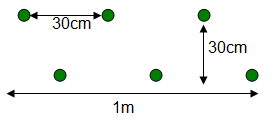
Hedgerows should be planted in a double staggered row 30cm apart, this works out at around 6 plants per metre.
Maintenance
Control weeds for at least 2 years after planting as they can easy suppress young trees (preferably by use of mulch and hand weeding). Avoid pruning hedgerows during the bird nesting season which runs from March to August. See also our online guide to management of hedgerows
Documents to download
- Application for work to trees under a TPO
- Notification of work to trees in conservation areas
- TPO application form - guidance notes
- Protected Trees: A Guide to Tree Preservation Procedures
- Example of a planting plan